
India is home to an extraordinary range of folk art traditions, each reflecting the cultural, spiritual, and social ethos of the communities that created them. Among these, Madhubani art painting stands out as a vibrant, intricate, and deeply symbolic form of artistic expression. Originating from the Mithila region of Bihar, Madhubani art is more than just decorative—it is a celebration of rituals, mythology, and everyday life. Its handcrafted nature, often referred to as Madhubani Handmade painting, preserves the cultural heritage of the region while captivating art enthusiasts across the world.
Artists like Dulari Devi have played an instrumental role in bringing Madhubani art to international recognition. By maintaining traditional techniques and motifs while sharing their work globally, these artists have ensured that Madhubani painting continues to thrive in contemporary times.
Origins and Historical Significance
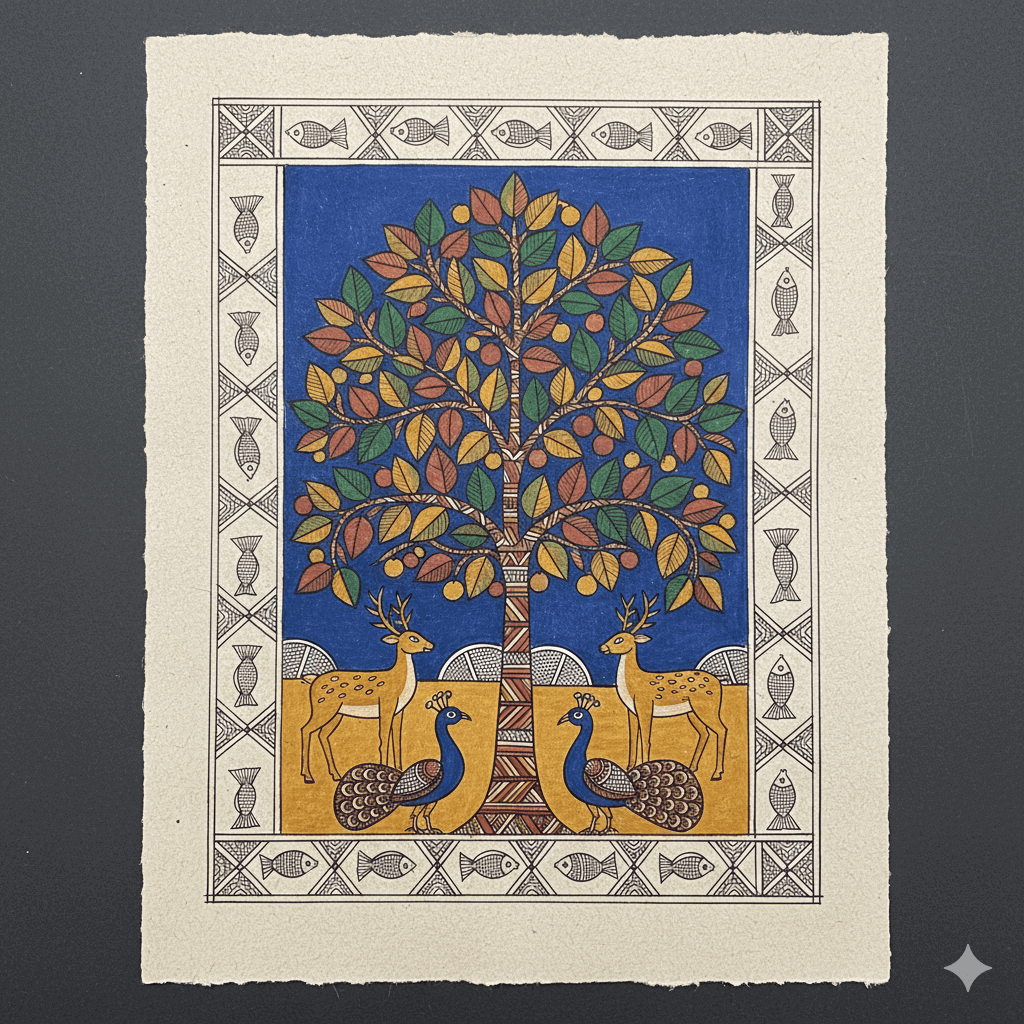
Madhubani painting, also known as Mithila painting, is believed to have originated over 2,500 years ago in the Mithila region of Bihar. Traditionally, these paintings were created by women on the walls and floors of their homes during festivals, weddings, and religious ceremonies. The art form was a medium for storytelling, celebrating fertility, devotion, and the cycles of life and nature.
The themes and motifs of Madhubani art are deeply symbolic. Paintings often depict Hindu deities, scenes from epics like the Ramayana and Mahabharata, animals, birds, and elements of nature. Geometric patterns and vibrant colors are carefully composed to create intricate visual narratives that communicate not only beauty but also cultural identity and social values.
Techniques and Materials in Madhubani Painting
The beauty of Madhubani Handmade painting lies in its unique techniques and natural materials. Traditionally, artists used fingers, twigs, brushes, and even matchsticks to create intricate designs on walls and floors. The colors were derived from natural sources: black from soot, red from powdered brick, yellow from turmeric, green from leaves, and blue from indigo. These natural pigments gave the paintings an earthy yet vivid quality, which continues to define Madhubani art today.
Modern Madhubani paintings are often created on handmade paper, canvas, and fabric, allowing the art form to reach a global audience. Despite the transition to portable surfaces, the essence of the traditional techniques—handmade detailing, vibrant pigments, and intricate patterns—remains intact. Artists like Dulari Devi have become ambassadors of this tradition, teaching and promoting authentic Madhubani art techniques to ensure its preservation and continued relevance.
Themes and Symbolism
Symbolism is central to Madhubani art. Every motif, color, and pattern carries meaning. Deities like Krishna, Shiva, Durga, and Ganesha are frequently depicted, reflecting religious devotion and cultural narratives. Nature plays a prominent role, with trees, birds, fish, and the sun representing fertility, prosperity, and harmony. Geometric patterns often frame these central themes, adding rhythm and structure to the composition.
Social rituals, festivals, and life events such as weddings are commonly depicted in Madhubani paintings, making them a living record of community life. The art form thus functions not just as decoration but as a cultural archive, preserving the stories, beliefs, and values of the Mithila region for future generations.
The Role of Women in Madhubani Art
Madhubani art has traditionally been practiced by women, passed down through generations as part of domestic life. Women used painting as a form of self-expression, creativity, and social storytelling. Their works celebrated fertility, devotion, and community, embedding cultural knowledge within visual forms.
Today, women artists continue to dominate the field, though men also participate. Artists like Dulari Devi have elevated Madhubani painting to international prominence, winning awards and recognition while ensuring the authenticity of traditional techniques. By teaching and mentoring new generations, these artists sustain a centuries-old tradition while encouraging innovation and contemporary applications.
Contemporary Applications and Global Recognition
While Madhubani art originated as a domestic ritual practice, its intricate patterns and vibrant colors have made it a global phenomenon. Contemporary applications include wall murals, textiles, home decor, fashion, and digital media. The adaptability of Madhubani motifs ensures that the art remains relevant while honoring its cultural roots.
Artists like Dulari Devi have played a pivotal role in promoting Madhubani art internationally. Their participation in exhibitions, workshops, and cultural events has introduced this folk tradition to audiences worldwide, ensuring recognition of both its aesthetic and cultural significance. By sharing the techniques and symbolic meanings, these artists have created awareness and appreciation that extends far beyond the Mithila region.
Challenges and Preservation
Despite its global popularity, Madhubani art faces challenges. Commercialization and mass production can sometimes compromise authenticity, leading to imitation products that do not reflect traditional techniques or symbolism. Preserving the handmade essence and cultural context of Madhubani paintings is therefore essential.
Efforts by organizations, cultural institutions, and master artists like Dulari Devi focus on training, workshops, and exhibitions that promote authentic Madhubani Handmade painting. By combining tradition with contemporary platforms, they ensure that this folk art continues to thrive, providing both economic opportunities for artists and cultural education for global audiences.
Why Madhubani Art Remains Timeless
The timelessness of Madhubani painting lies in its unique combination of artistry, symbolism, and cultural storytelling. Unlike many other art forms that prioritize decoration alone, Madhubani art conveys narratives, values, and spiritual beliefs. Its handmade process, use of natural colors, and meticulous detailing give it a distinctive charm that transcends generations.
Furthermore, the universal themes of nature, community, and spirituality resonate with audiences worldwide. Whether in its traditional wall paintings or modern canvases, Madhubani art continues to inspire creativity, cultural appreciation, and a sense of connection to heritage.
Conclusion
Madhubani art painting is a living testament to India’s rich folk legacy. Its intricate patterns, vibrant colors, and symbolic storytelling make it both visually captivating and culturally significant. As a Madhubani Handmade painting, it preserves centuries of tradition while adapting to modern media and global audiences.
Artists like Dulari Devi have ensured that this art form remains authentic, relevant, and accessible. Through exhibitions, workshops, and mentorship, they have created avenues for learning, appreciation, and preservation, enabling Madhubani art to continue its journey from the homes of Mithila to the walls, galleries, and collections of the world.
Celebrating Madhubani art is not just about admiring beauty—it is about honoring the cultural heritage, devotion, and creativity of a community whose stories have been told for generations through brushstrokes, patterns, and handmade artistry. By continuing to value and support this tradition, we ensure that the rich legacy of Madhubani painting remains a vibrant part of India’s cultural narrative for years to come.