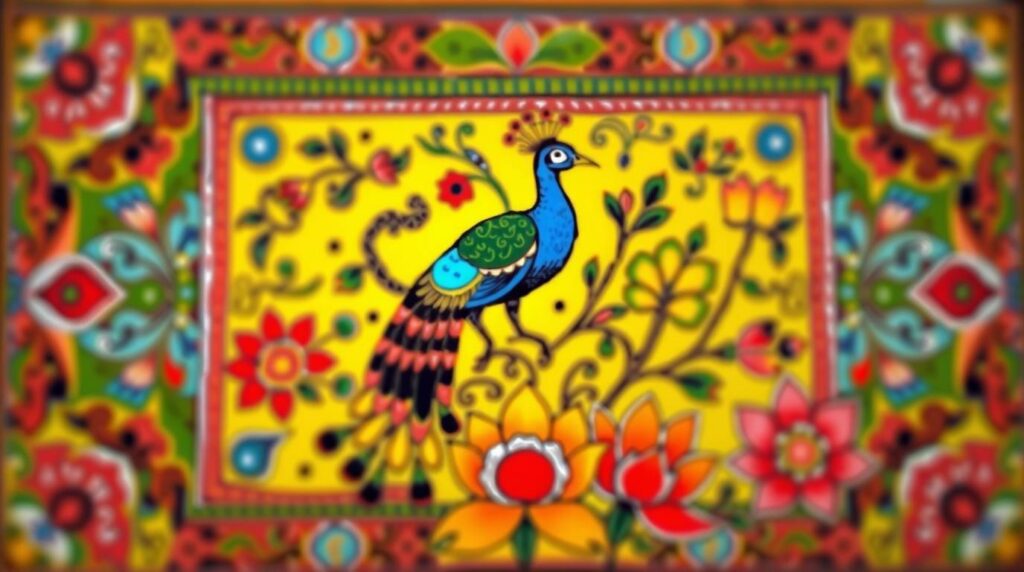
India is home to an astonishing diversity of folk art, each style reflecting the history, beliefs, and lifestyle of the communities that created it. Among these, Madhubani art painting stands out as a distinctive and celebrated form, known for its intricate patterns, vibrant colors, and symbolic storytelling. Originating from the Mithila region of Bihar, Madhubani painting has transcended its traditional context to gain recognition across India and around the globe. Its uniqueness lies not only in its aesthetics but also in its cultural significance, ritualistic origins, and handmade authenticity.
Artists like Dulari Devi have played a pivotal role in preserving and promoting Madhubani art, showcasing its beauty while educating new generations about its techniques and meanings. Their work ensures that this centuries-old tradition remains a living, evolving part of India’s artistic heritage.
Historical Background of Madhubani Art
Madhubani painting, also known as Mithila painting, is believed to date back over 2,500 years. Traditionally, it was created by women on the walls and floors of their homes during religious festivals, weddings, and other social ceremonies. The art served as a means of storytelling, documenting community life, spiritual beliefs, and rituals in visually expressive forms.
Unlike many other Indian art forms, Madhubani painting was originally not created for commercial purposes. It was an integral part of domestic and ritual life. Its themes often revolved around fertility, devotion, prosperity, and natural harmony. Over time, these paintings evolved into portable forms on handmade paper, canvas, and fabrics, allowing their reach to expand far beyond the homes of Mithila.
Techniques That Define Madhubani Handmade Painting
The technique of Madhubani Handmade painting is one of its most defining features. Traditional artists used natural tools like fingers, twigs, bamboo sticks, and brushes to apply pigments. Colors were extracted from natural sources: soot for black, turmeric for yellow, powdered brick for red, indigo for blue, and leaves for green. This use of natural pigments gave Madhubani paintings an earthy yet vibrant quality, which continues to charm audiences today.
Madhubani art is characterized by meticulous line work, geometric patterns, and dense, decorative compositions. Artists often fill the background with fine details, leaving no empty spaces, a technique known as “filling” or “bharai”. The repetitive use of lines, dots, and intricate designs creates rhythm and movement, giving the painting an almost hypnotic appeal.
Even in contemporary forms, these traditional techniques are preserved, emphasizing the handmade nature and authenticity of the art. Courses and workshops led by artists such as Dulari Devi teach these skills while also explaining the symbolic meanings behind each motif, ensuring that learners understand both the craft and the culture.
Symbolism and Themes in Madhubani Art
Madhubani paintings are rich in symbolism, which makes them culturally significant as well as visually striking. Common motifs include Hindu deities such as Krishna, Shiva, Durga, and Ganesha, as well as mythological scenes from the Ramayana and Mahabharata. Nature is central, with trees, flowers, birds, fish, and the sun representing fertility, prosperity, and harmony.
Life events such as weddings, childbirth, and festivals are also frequently depicted. The art reflects a deep understanding of the rhythms of rural life, connecting human activity with the cycles of nature. Each symbol has a purpose, creating a visual narrative that communicates stories, beliefs, and cultural values across generations.
Human figures are usually stylized and two-dimensional, often shown in profile. Despite the simplicity of form, the figures are expressive, capturing movement, emotion, and community interactions. Animals and birds are similarly stylized, symbolizing various aspects of life and nature. The combination of detailed patterns, vibrant colors, and symbolic storytelling gives Madhubani art its unique charm.
The Role of Women in Madhubani Art
Madhubani art has traditionally been practiced by women, passed down from mothers to daughters within households. This tradition allowed women to express creativity, document social rituals, and communicate spiritual beliefs. Through painting, women actively participated in the cultural and religious life of the community, making the art both personal and communal.
In modern times, women continue to dominate the field, although male artists are increasingly contributing as well. Figures like Dulari Devi have brought Madhubani painting to national and international recognition. By teaching workshops, exhibiting their work, and preserving traditional techniques, these artists ensure the survival and growth of the art form.
Modern Adaptations and Global Appeal
While Madhubani art retains its traditional essence, it has found new expressions in modern art, fashion, home decor, and graphic design. Its intricate patterns, bright colors, and symbolic depth make it highly adaptable. From murals and wall hangings to textiles and stationery, Madhubani motifs have become a part of contemporary design both in India and internationally.
The global appeal of Madhubani painting lies in its visual universality. Its geometric simplicity resonates with modern minimalism, while its storytelling and symbolic richness offer depth and meaning. International art collectors, museums, and cultural institutions recognize its value, promoting Madhubani as one of India’s most iconic folk art traditions.
Preservation and Education
Despite its popularity, Madhubani art faces challenges such as commercialization, imitation, and dilution of traditional techniques. Preserving its authenticity is crucial to maintaining its cultural significance. Educational initiatives led by artists like Dulari Devi and organizations dedicated to traditional arts play a vital role in safeguarding this heritage.
The Madhubani Art Course by Dulari Devi and similar programs teach not only painting techniques but also the cultural context, symbolism, and historical significance of the art. Such structured learning ensures that the art is practiced with respect, helping learners worldwide appreciate its depth while maintaining the traditional craft.
Why Madhubani Art Painting Is Unique
Several factors make Madhubani art unique among Indian folk arts. Its handmade nature, reliance on natural materials, and meticulous detailing distinguish it from mass-produced art forms. The combination of geometric precision, vibrant color palettes, and symbolic storytelling sets it apart from other regional traditions.
Additionally, Madhubani painting’s origins in ritualistic, domestic contexts give it a cultural depth that is rarely found in other art forms. It is not merely decorative; it is a medium of communication, preservation, and celebration of life. Its ability to adapt to contemporary surfaces and global markets while retaining its authenticity further enhances its uniqueness.
Conclusion
Madhubani art painting is a timeless treasure of India’s folk heritage. Its intricate designs, vibrant colors, and symbolic storytelling reflect centuries of tradition, devotion, and community life. As a Madhubani Handmade painting, it represents the skill, patience, and cultural knowledge of generations of artists, particularly women.
The work of modern masters like Dulari Devi ensures that this art form continues to thrive, bridging traditional practices with contemporary applications. Through education, exhibitions, and global recognition, Madhubani painting maintains its authenticity while inspiring creativity across cultures.
Its distinct techniques, symbolic depth, and ability to convey stories visually make Madhubani art truly unique among Indian folk arts. By appreciating and supporting this craft, we not only celebrate its beauty but also honor the rich cultural legacy of the Mithila region, ensuring that this artistic tradition continues to enchant and educate for generations to come.