
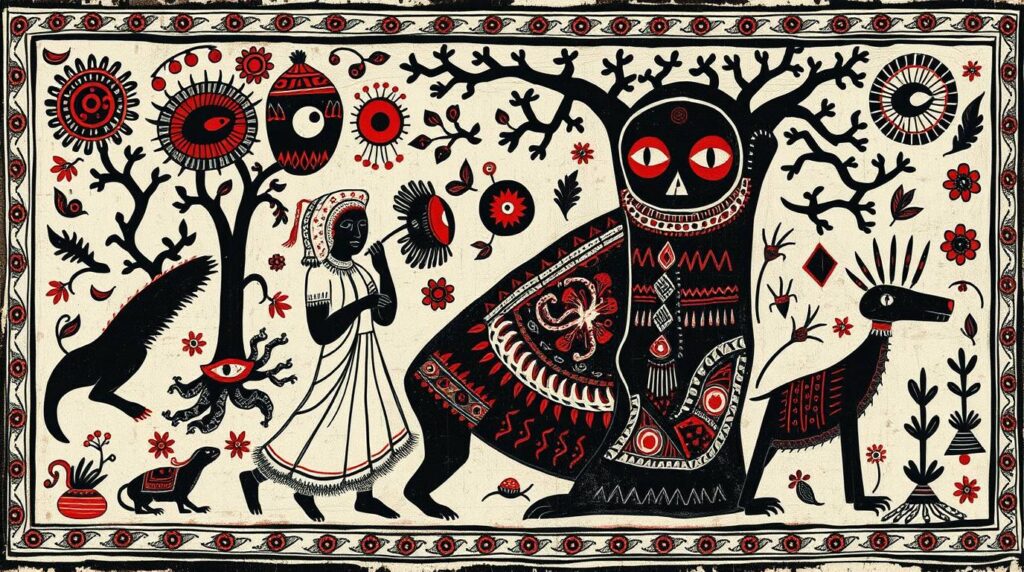
India’s tribal communities are custodians of a rich and diverse cultural heritage, expressed vividly through their art, craft, and folklore. Among these, Baiga Art Painting is a remarkable example of tribal creativity and tradition. Originating from the Baiga tribe of Madhya Pradesh and Chhattisgarh, this art form reflects the intimate connection between the community and nature, spirituality, and daily life. Its handcrafted authenticity, known as Baiga handmade art painting, preserves not only the aesthetic traditions of the tribe but also their cultural narratives.
Artists like Jodhaiya Bai have played a pivotal role in bringing Baiga art to wider audiences, ensuring that this tribal legacy is appreciated and preserved for future generations. By combining traditional techniques with contemporary presentation, Baiga paintings continue to capture the imagination of art lovers, collectors, and cultural enthusiasts.
Historical Background of Baiga Art
Baiga art is deeply rooted in the history and lifestyle of the Baiga tribe, one of India’s oldest tribal communities. The Baigas are primarily found in the forested regions of Madhya Pradesh and Chhattisgarh, and their art has traditionally been an extension of their daily life and spiritual beliefs.
Historically, Baiga paintings were created on the walls and floors of homes as a part of ritualistic practices. These artworks often depicted natural elements such as animals, birds, plants, rivers, and celestial symbols, alongside human figures involved in communal and religious activities. Unlike other folk arts that evolved for decorative purposes or commercial use, Baiga art was primarily an expression of reverence for nature and a medium to document tribal knowledge, rituals, and beliefs.
Techniques and Materials in Baiga Handmade Art Painting
The distinctiveness of Baiga handmade art painting lies in its materials and techniques. Traditionally, the Baiga artists used natural pigments derived from soil, charcoal, plant extracts, and minerals. Brushes were often handmade from twigs, bamboo sticks, or even fingers, allowing intricate detailing and a personal touch in each artwork.
Baiga paintings are characterized by geometric patterns, symbolic motifs, and rhythmic compositions. Unlike highly colorful folk art, Baiga paintings often use earthy tones—reds, blacks, browns, and whites—which reflect the tribe’s connection to the forest and the natural environment.
The process of creating Baiga art is not just technical but spiritual. Each motif and pattern is imbued with meaning, reflecting rituals, seasons, and the community’s relationship with nature. Modern adaptations allow these paintings to be created on paper, canvas, or textile, bringing the tribal art to galleries, homes, and global audiences while retaining its handmade authenticity.
Symbolism and Themes in Baiga Art
Symbolism is central to Baiga art, making each painting a visual narrative of tribal life and beliefs. Animals like tigers, elephants, and birds are often depicted, symbolizing strength, freedom, and harmony with nature. Human figures are shown engaged in farming, hunting, or ritual dances, highlighting the symbiotic relationship between humans and their environment.
Sacred and celestial symbols, such as the sun, moon, and stars, also feature prominently in Baiga paintings, reflecting the spiritual worldview of the tribe. Geometric motifs like triangles, circles, and lines are used not just decoratively but to represent mountains, rivers, or cosmic cycles. These symbols together create a layered narrative that is both culturally rich and visually compelling.
Cultural Significance of Baiga Art
Baiga art is more than an aesthetic practice; it is a repository of cultural knowledge. Every painting conveys information about the tribe’s rituals, agricultural practices, festivals, and community values. The art serves as a living archive, preserving the philosophy and worldview of the Baiga people in a form that is both beautiful and instructive.
The art form also strengthens social cohesion. Paintings are often collaborative endeavors, created during communal events or rituals, reinforcing the shared cultural identity of the Baiga community. Through these practices, Baiga art remains a dynamic and integral part of tribal life, rather than a static or purely decorative craft.
Role of Artists in Preserving Baiga Art
Contemporary artists like Jodhaiya Bai have played a crucial role in bringing Baiga art to broader recognition. Through exhibitions, workshops, and collaborations with cultural organizations, these artists have introduced Baiga paintings to urban and international audiences. Their work ensures that traditional techniques, symbolism, and narratives are preserved while allowing for creative adaptations in modern contexts.
By teaching the techniques and cultural significance of Baiga art, artists like Jodhaiya Bai help new generations of creators engage with the art form authentically. They bridge the gap between tradition and modernity, enabling the tribal art to thrive in a contemporary world without losing its original essence.
Modern Applications and Global Appeal
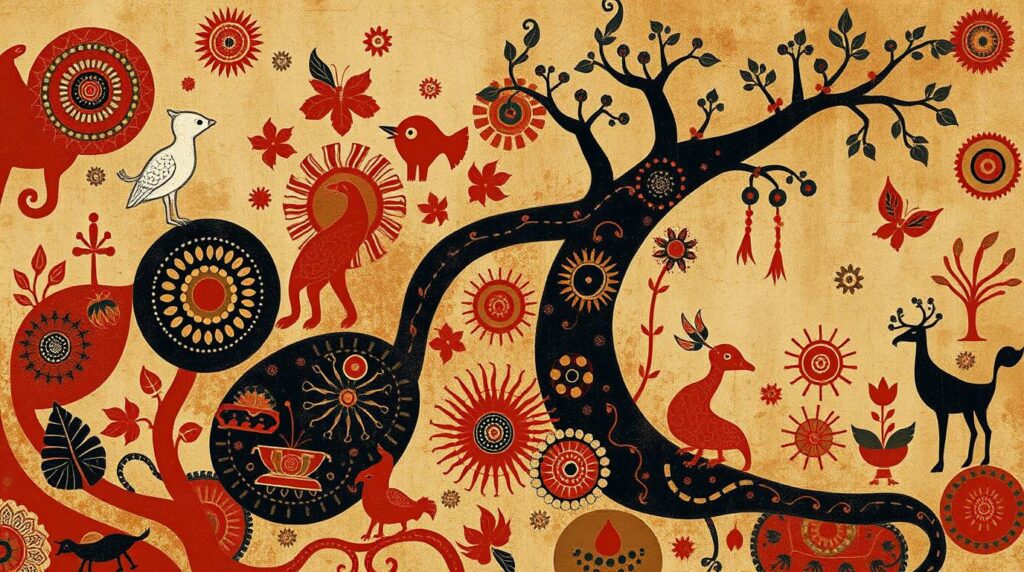
Baiga art has gradually found its place in contemporary design, home decor, and the art market. Its earthy colors, geometric patterns, and symbolic storytelling make it versatile for murals, textiles, paintings on canvas, and other decorative applications. Global audiences are increasingly appreciating Baiga art for its originality, cultural depth, and handmade authenticity.
The appeal of Baiga art extends beyond aesthetics. In a world dominated by mass production, the handmade quality, cultural storytelling, and earthy authenticity of Baiga paintings resonate strongly with collectors, interior designers, and cultural enthusiasts seeking unique and meaningful art.
Challenges in Preserving Baiga Art
Despite growing recognition, Baiga art faces challenges. Commercialization, imitation, and lack of documentation can threaten the authenticity and cultural context of the artwork. To preserve the art, it is essential to maintain traditional techniques, handmade methods, and the symbolic meanings embedded in each painting.
Efforts by tribal artists, cultural organizations, and local initiatives focus on training, exhibitions, and awareness programs. These efforts ensure that Baiga art continues to be practiced authentically while providing economic opportunities for the tribal community.
Why Baiga Art Painting is Unique
Baiga art is unique for several reasons. Its emphasis on earthy tones, geometric patterns, and handmade detailing sets it apart from other Indian folk art traditions. The art is deeply integrated into the social and spiritual life of the tribe, serving as both a ritualistic practice and a narrative medium.
The adaptability of Baiga art to contemporary mediums like canvas, paper, and textiles, without losing its traditional essence, further enhances its uniqueness. Artists like Jodhaiya Bai ensure that this tribal legacy is not only preserved but also appreciated by new generations worldwide.
Conclusion
Baiga Art Painting is a living testament to the creativity, spirituality, and cultural richness of India’s tribal communities. Its handmade techniques, earthy colors, and symbolic storytelling make it a distinct and invaluable art form. Through the dedication of artists like Jodhaiya Bai, Baiga art has gained national and international recognition, bridging traditional tribal life with contemporary appreciation.Preserving and promoting Baiga art is not only about maintaining a visual tradition; it is about honoring the history, beliefs, and identity of the Baiga tribe. By celebrating Baiga handmade art painting, we ensure that this rich tribal legacy continues to inspire, educate, and captivate art lovers across generations and geographies.