
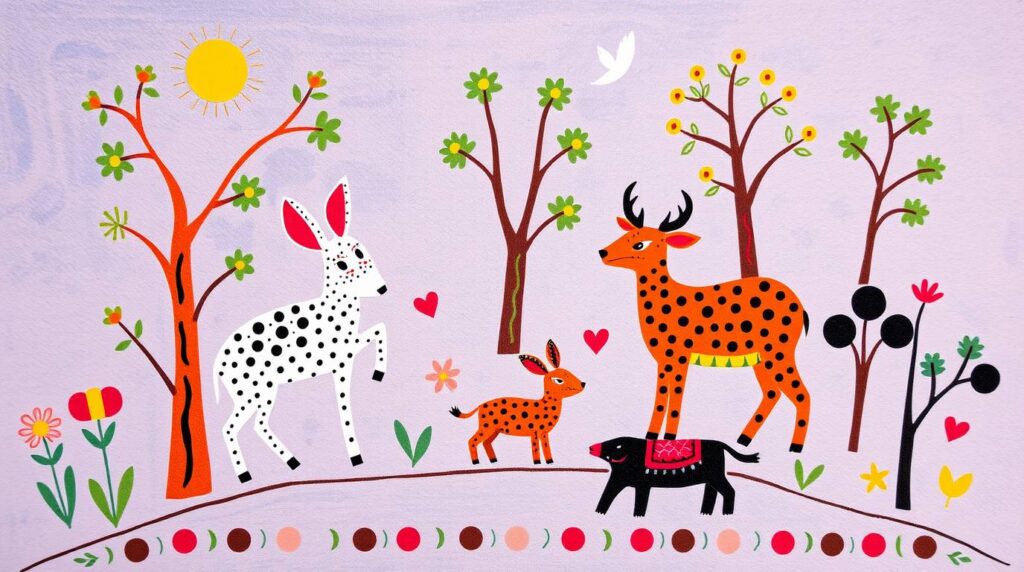
India’s cultural fabric is intricately woven with the creativity and traditions of its tribal communities. Among the most distinctive of these is Bhil Art Painting, an expressive form of tribal art practiced by the Bhil people, one of India’s largest tribal groups primarily residing in Madhya Pradesh, Rajasthan, Gujarat, and Maharashtra. Known for its vibrant colors, dynamic compositions, and storytelling motifs, Bhil art has not only survived centuries of tradition but continues to inspire artists and collectors across India and the world.
The handmade craftsmanship, referred to as bhil handmade art painting, preserves the community’s cultural identity while celebrating their deep connection with nature and daily life. Contemporary artists such as Bhuri Bai have been instrumental in promoting Bhil art beyond tribal boundaries, transforming it from a ritualistic and domestic craft into a celebrated national and international art form.
Historical Roots of Bhil Art
Bhil art traces its origins to the Bhil tribe, one of India’s most ancient communities, with a history deeply intertwined with forest life, hunting traditions, and spiritual practices. Traditionally, Bhil art was created on the walls of homes, depicting scenes from daily life, rituals, festivals, and tribal mythology. This practice served not only as decoration but also as a way to document community values, beliefs, and environmental awareness.
The art form was deeply connected to the Bhils’ intimate relationship with nature. Motifs of animals, birds, trees, rivers, and celestial bodies dominate Bhil paintings, reflecting a worldview that reveres the natural world and its cycles. Over time, the art evolved from mural painting on walls to portable formats on handmade paper, canvas, and cloth, allowing wider appreciation and marketability.
Techniques and Materials in Bhil Handmade Art Painting
The uniqueness of bhil handmade art painting lies in its technique, meticulous detailing, and natural materials. Traditionally, artists used locally sourced pigments derived from minerals, plants, and charcoal. The colors are bold and vibrant—reds, yellows, blues, greens, and blacks—applied with handmade brushes or sometimes even fingers.
A defining characteristic of Bhil art is the use of “dotted” compositions, where every figure, animal, or natural element is outlined and filled with small dots or lines, creating rhythmic and textured visual patterns. The paintings are highly stylized, often using bold outlines, geometric forms, and repetitive motifs to convey movement and narrative depth.
Contemporary adaptations have brought Bhil art onto paper, canvas, and other portable surfaces, while retaining the essence of its handmade tradition. Artists like Bhuri Bai ensure that these works preserve the tribal aesthetic and symbolic meaning, while also appealing to contemporary collectors and art enthusiasts.
Themes and Symbolism in Bhil Art
Bhil art is rich in symbolism, reflecting the tribe’s spiritual beliefs, myths, and daily life. Animals such as deer, elephants, and peacocks, along with birds and fish, feature prominently, symbolizing fertility, prosperity, and harmony with nature. Human figures often depict hunting, farming, dancing, or rituals, emphasizing the community’s lifestyle and interconnectedness with the environment.
The dotted technique is more than an artistic choice; it symbolizes energy, vitality, and continuity in life and nature. The geometric patterns often represent sacred spaces, forests, rivers, and mountains, creating layered stories that reflect both mythology and reality. Through these visual narratives, Bhil art serves as a cultural record of tribal life and beliefs.
The Role of Tribal Artists in Preserving Bhil Art
Artists like Bhuri Bai have been pivotal in preserving and promoting Bhil art. Through workshops, exhibitions, and collaborations with cultural institutions, they have brought this tribal art form to urban and international audiences. By teaching the traditional techniques, symbolic meanings, and narrative storytelling embedded in Bhil art, these artists ensure that younger generations understand its cultural importance.
The recognition of Bhil art on global platforms also provides economic support to tribal communities, enabling them to sustain traditional practices while gaining professional opportunities. This preservation is crucial for maintaining the cultural and artistic integrity of Bhil painting.
Modern Applications and Global Appeal
Today, Bhil art is not confined to tribal homes or ritual contexts. Its vibrant colors, dotted compositions, and storytelling motifs have found their way into galleries, interior design, textiles, and fashion. The bold and dynamic visual style of Bhil paintings makes them ideal for contemporary spaces, bringing tribal authenticity and a sense of cultural narrative into modern life.
Collectors and art enthusiasts worldwide appreciate Bhil art for its handmade quality, cultural depth, and striking aesthetics. Digital platforms and online marketplaces have further expanded the visibility of Bhil art, connecting traditional tribal artistry with global audiences seeking unique and meaningful art forms.
Challenges in Preserving Bhil Art
Despite its popularity, Bhil art faces challenges such as commercialization, imitation, and erosion of traditional methods. Mass-produced copies can undermine the authenticity and cultural significance of Bhil handmade art painting.
Preservation efforts focus on education, mentorship, and cultural promotion. Artists like Bhuri Bai and organizations supporting tribal arts conduct training programs, exhibitions, and workshops, ensuring that traditional techniques and symbolic meanings are preserved while adapting the art form to contemporary markets. These efforts help maintain both cultural authenticity and economic sustainability for tribal artists.
Why Bhil Art Painting is a Tribal Treasure
Bhil art is a tribal treasure due to its handmade authenticity, vibrant aesthetics, and symbolic storytelling. Each painting reflects centuries of tradition, cultural knowledge, and environmental awareness. Its dotted compositions and geometric patterns make it instantly recognizable, while the themes of nature, ritual, and mythology give it depth and cultural resonance.
Its adaptability to modern mediums without losing its traditional essence ensures that Bhil art continues to remain relevant and cherished. The dedication of artists like Bhuri Bai guarantees that Bhil art is celebrated not only as an aesthetic form but also as a vital cultural heritage of India’s tribal communities.
Conclusion
Bhil Art Painting is a living testament to the creativity, spirituality, and cultural heritage of India’s tribal communities. Its vibrant colors, dotted patterns, and symbolic storytelling make it a unique and enduring art form. As a bhil handmade art painting, it preserves centuries of tradition, rituals, and community life, offering a window into the worldview of the Bhil people.
Through the efforts of artists like Bhuri Bai, Bhil art has transcended its traditional boundaries, finding a place in contemporary galleries, global exhibitions, and modern living spaces. Preserving and promoting Bhil art is not just about celebrating its beauty; it is about honoring the identity, history, and values of the Bhil tribe.By supporting Bhil Art Painting, we ensure that this vibrant tribal legacy continues to inspire, educate, and captivate audiences, preserving India’s rich artistic heritage for generations to come.