In the world of home care, the stakes are deeply personal. Every shift filled, every medication administered, every care note logged—these aren’t just tasks. They’re decisions that affect real lives: aging parents, individuals with disabilities, patients recovering at home.
Yet for too long, home care agencies have been flying blind—operating on paper records, scattered systems, and gut instinct. That’s changing.
Welcome to the era of home care software solutions—where data isn’t just collected, it’s used to drive better, safer, smarter care.
The Problem with “We’ve Always Done It This Way”
Let’s start with the obvious: home care is chaotic.
Schedules change hourly. Clients have complex needs. Regulations evolve constantly. And caregivers? They’re often out in the field, juggling visits, care tasks, and documentation—without real-time support.
In this environment, relying on spreadsheets, whiteboards, or siloed tools doesn’t just slow you down. It creates gaps in care.
Information gets lost. Visits are missed. Trends go unnoticed until they become problems.
That’s where home care software solutions step in—not just to digitize what you’re doing, but to transform how you’re doing it.
Real-Time Data = Real-Time Decisions
One of the biggest breakthroughs in modern home care platforms is the ability to capture and use data in real time.
When a caregiver clocks into a visit, logs a symptom change, or checks off a care task from their mobile device, that data is instantly available to the office. Not tomorrow. Not next week. Right now.
This matters.
Because when a client’s condition changes—when they refuse meals, show signs of confusion, or miss a dose—you can act immediately. You can flag the care plan. Alert family. Loop in a nurse. Prevent hospitalization.
That’s not paperwork. That’s preventive care, made possible by connected systems.
Predictive Insights: Seeing Trouble Before It Starts
Great home care isn’t just reactive. It’s proactive.
With the right software in place, agencies can spot patterns across data points that would otherwise go unnoticed. Maybe a client is calling for extra support more frequently. Maybe a caregiver’s punctuality is slipping. Maybe missed tasks are clustering around a certain day or location.
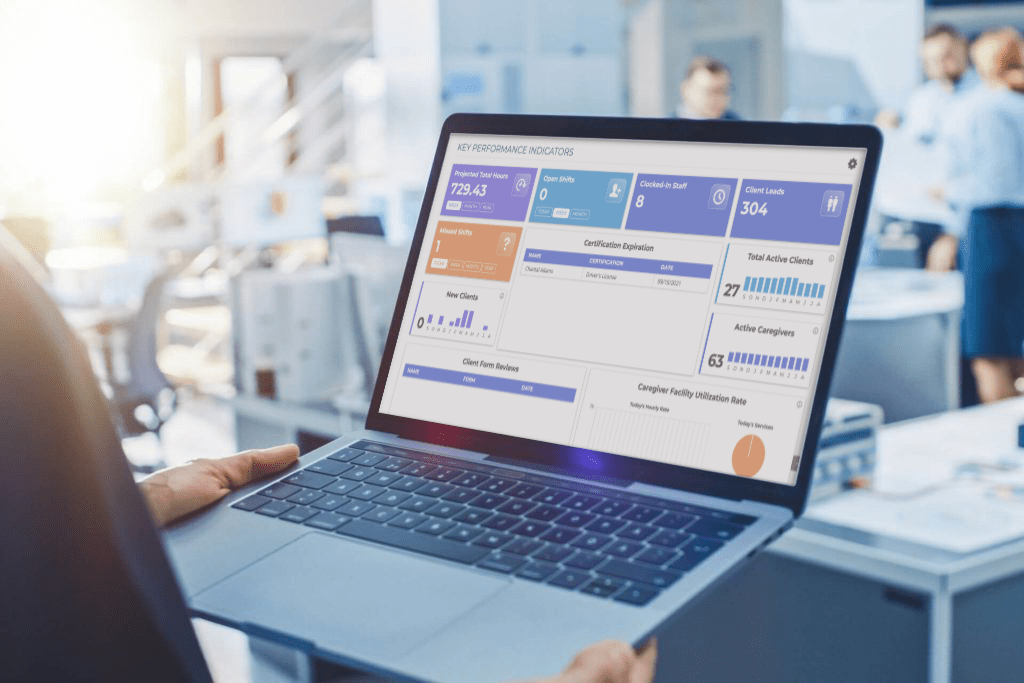
Home care software doesn’t just report these things—it visualizes them.
Smart dashboards and predictive analytics allow agency leaders to identify at-risk clients, flag gaps in service, and prioritize interventions. Instead of scrambling to fix problems after they escalate, teams can prevent them altogether.
Better Outcomes Start with Better Schedules
Here’s something not often said out loud: scheduling is make-or-break in home care.
Who you send, when you send them, and how consistently you do it directly impacts client experience and clinical outcomes. Continuity builds trust. Mismatched assignments create stress.
Modern software platforms don’t just schedule—they optimize. Based on caregiver skills, certifications, geography, availability, and client preferences.
The result? Happier clients. Lower staff burnout. Fewer no-shows. And yes, fewer emergency calls at 3am.
Documentation Without the Drag
Let’s talk documentation—every caregiver’s least favorite part of the job.
When documentation is tedious, it doesn’t get done. Or it gets done after the fact. Or it gets done wrong. All of which puts care quality, compliance, and revenue at risk.
Home care software solutions simplify this. Mobile apps guide caregivers through visit tasks, allow for voice-to-text notes, and automatically time-stamp entries. No more forgotten logs. No more deciphering handwriting. Just clean, accurate, timely records.
Which, let’s be honest, makes everyone’s life easier.
Caregivers Need Data Too
We often think of data as a management tool—but it’s just as powerful for those delivering care.
When caregivers have access to real-time client profiles, medication changes, updated care tasks, and emergency contacts—on their phones—they feel informed. Prepared. Supported.
That kind of confidence shows up in the quality of care they provide.
It also improves retention. Because when caregivers are treated like professionals and equipped with tools that work, they’re more likely to stay.
Data Meets Compliance (And Saves You From Audit Panic)
Compliance in home care isn’t optional. Regulations are strict, audits are real, and mistakes are expensive.
Home care software doesn’t just help you stay compliant—it proves that you are.
Every visit is tracked. Every task is logged. Every care plan revision is documented. And when the auditors show up? You have everything time-stamped, geo-tagged, and export-ready.
Instead of scrambling to reconstruct paper trails, you can focus on the bigger picture—like improving client outcomes and expanding your services.
Family Transparency Without the Phone Tag
Families want to know how their loved one is doing—but agency phone lines aren’t built for constant updates.
Some home care platforms now offer family portals, allowing approved family members to see visit history, care notes, and updates in real time. It’s a simple way to reduce stress, increase satisfaction, and build lasting trust.
Because families that feel informed are families that stay.
Final Thought: Data Alone Isn’t Enough—But Direction Is
Let’s be clear: data doesn’t deliver care. People do.
But when your people are supported by accurate, timely, actionable data, they can focus on what they do best—connecting, supporting, healing.
That’s the real power of modern home care software solutions. Not just automation, but alignment. Not just dashboards, but direction.
So if your agency is still running on guesswork, fragmented systems, or last-minute fixes—it’s time to level up.The future of care isn’t just compassionate.
It’s connected.