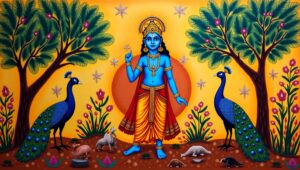

As far as heritage and culture are concerned, few nations can boast fascinating blends like India’s. Miniature painting is perhaps one of the most interesting aspects of India’s heritage. These miniature paintings are intricate and colorful narratives of supreme devotion and romance, multifaceted history, and lively nature. Though small in dimensions, these paintings are pieces of worlds held captive in frames. India also has the privilege of projecting its skill of miniature painting at the imperial courts of Rajputs and Mughals. Even modern masters like Anandi Lal Sharma have wrought their magic in the realms of miniature painting. The unparalleled mastery of these painters has helped the world recognize the value of miniature paintings. But its value and scope can only be realized when studying the history and style of miniature painting and its relevance in modern-day India.
The Beginnings of Miniature Painting in India
With the earliest traces of miniature paintings incorporated in the illuminated palm-leaf manuscripts created during the 9th and 10th centuries by the Buddhists, the origin of miniature painting in India can be traced back a thousand years. These significant and small paintings complemented religious manuscripts, illustrating deities and religious instruments, as well as narrating Jataka tales.
With Mughal rule commencing in the 16th century, advances in miniature painting were noted. Mughals, influenced by the Persians, invited miniature painters from Central Asia. There, Indian and Persian miniature painting traditions merged into a unique Indo-Persian miniature painting style. Indo-Persian miniatures incorporated more realistic portraiture, detailed natural landscapes, and architecture. Several Mughal miniatures depicted court life, royal hunts, battles, and romantic encounters, adding value as historical documents as well as works of art.
Later, the art form spread from the Mughal courts to Rajputana, the lower Himalayas, and the Deccan, where it took on regional variations. Each region cultivated its own school of miniature painting, shaped by local customs, religious practices, and artistic tastes.
Styles of Indian Miniature Painting
One of the striking aspects of miniature painting is its diversity. Every school of miniature painting, though having narrative and detail, is a fusion of artistic interpretation.
Miniature Mughal paintings are considered masterpieces of art for their accurate historical realism. Artists captured monarchs and their courts in the most subtle detail and faintest shadings. These paintings portray periods of political importance or royal leisure, reflecting the magnificence of the Mughal dynasty.
Rajput miniature paintings achieved prominence in Mewar, Bundi, Kota, and Kishangarh. These paintings captured elements of mythology and devotion while combining bright colors and strong lines. The paintings of Radha and Krishna alongside parts of the Ramayana and Mahabharata showcased the devotion and spirituality embedded in Rajasthan’s culture. Kishangarh miniatures, especially, specialized in elongated figures arranged in poetic landscapes expressing divine love.
In the Himalayan regions of Kangra, Guler, and Basohli, Pahari miniature paintings often featured nature alongside devotion. The Kangra paintings are well known for their romantic stories, soft colors, and sophisticated brushwork. Divine figures, along with subtle scenery textures, induce profound emotion through the gentle portrayal of rivers and forests.
Deccan region miniature paintings incorporated Persian elements alongside local styles. These miniatures radiate with colorful designs, intricate patterns, and inventive use of space. Other schools of miniature paintings focused on rulers, mystical subjects, and courtly life.
The synthesis of all these styles reveals the adaptability of miniature art to regional conditions, creating a diverse harmony of cultural tradition throughout India.
The Techniques and Materials Behind the Art
The unique feature of miniature art painting is its meticulous craftsmanship. Natural pigments were prepared from minerals, plants, and stones. Ultramarine blue came from lapis lazuli, red from cinnabar, and green from malachite. Pigments were enhanced with gold and silver leaf to highlight important details and add metallic radiance.
Brushes were constructed from delicate squirrel hair, permitting artists to make strokes fine enough to paint eyelashes, hair strands, or leaf veins. The artistry demanded in these works of miniature painting is immense, often spanning weeks or months of focused effort.
Miniature paintings were executed on leather, paper, ivory, wood, and palm leaves, with lower margins and borders receiving meticulous attention. Subjects illustrated myths, religion, court behavior, and music, creating a visual encyclopedia of cultural life.
The Importance of Miniature Art
Miniature paintings captured and reflected India’s culture and tradition. They served as historical accounts for rulers and a medium for common people to express themselves, connecting them to spiritual and social narratives through depictions of gods and goddesses.
Romantic and devotional elements in Rajput and Pahari miniatures revealed the importance of faith and love, while Mughal paintings expressed political and ornate culture. Miniature paintings are unique in combining historical record with timeless aesthetic beauty.
Anandi Lal Sharma: A Living Master
A significant part of the modern survival of miniature paintings is due to artists like Anandi Lal Sharma. Important for Rajasthani miniature paintings, Sharma has dedicated decades to perfecting intricate brush strokes, narrative techniques, and creating natural pigments.
Sharma embodies traditional miniature painting while incorporating modern themes. He demonstrates that miniature painting can adapt to contemporary times without losing integrity. Through workshops and mentorship, Sharma ensures that miniature painting retains relevance in the modern world.
Miniature Painting Today
In the 21st century, miniature painting continues to enchant collectors and enthusiasts worldwide. Its subjects and themes transcend boundaries, and its intricacy captivates art lovers. Textile designs, garments, and even digital art reinterpret miniature painting today. Museums worldwide display India’s miniature collections, reinforcing their global significance.
Miniature paintings capture harmony and devotion, showcasing patience, dedication, and artistic skill—values increasingly rare in the digital age. This combination of tradition, precision, and beauty makes miniature painting remarkable.
Conclusion
Tracing the history of miniature painting in India is akin to appreciating the evolution of the country’s heritage, artistry, and legends. From manuscripts to Mughal courts, and through Rajput and Pahari lineages, the art form flourished.
Artists like Anandi Lal Sharma have connected this age-old tradition with contemporary art, preserving the skill and relevance of miniature painting. This tradition, defined by scale, precision, and intricate storytelling, continues to inspire and captivate, retaining its timeless significance.