
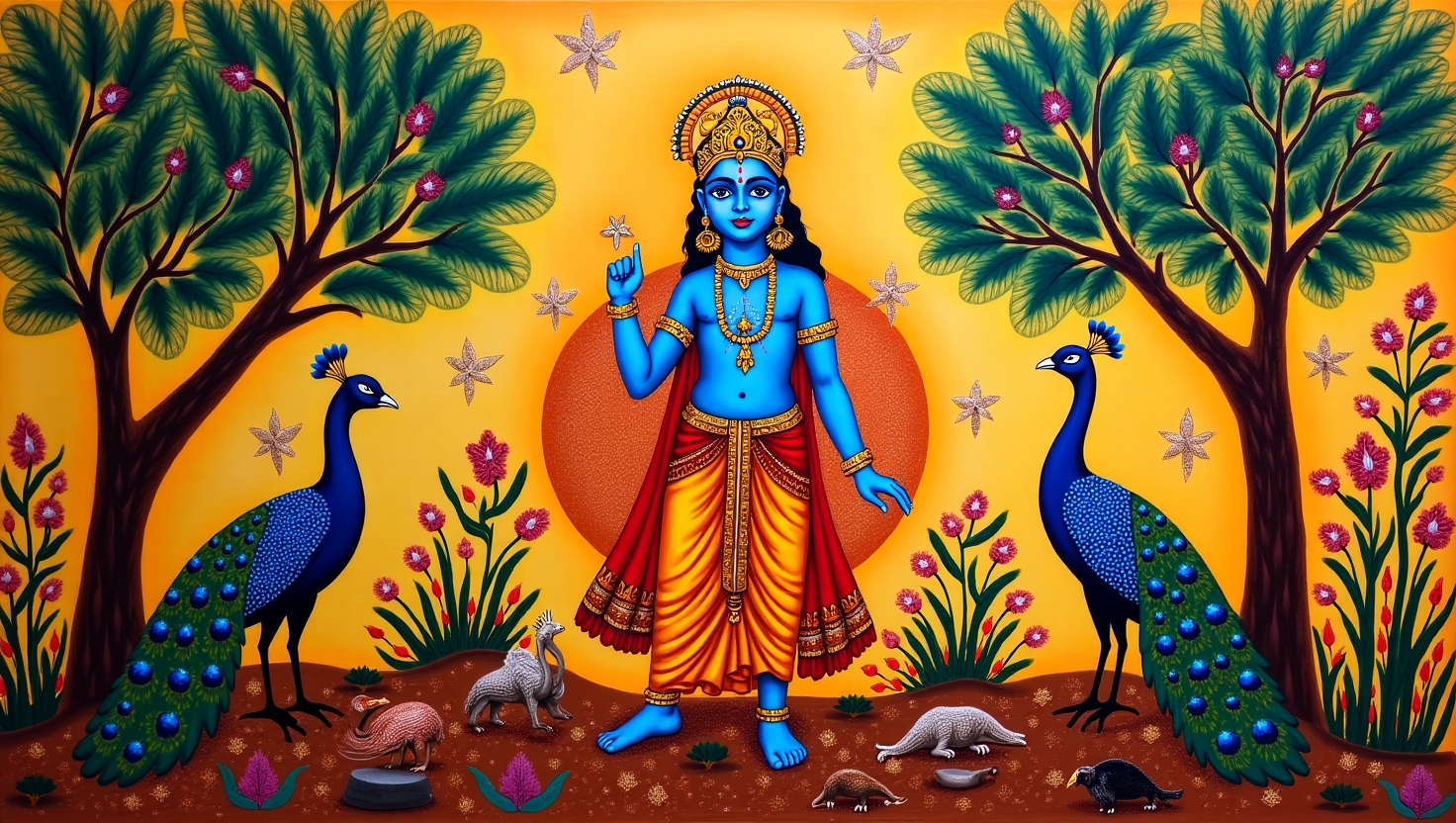
India is a country where every region offers a unique blend of art and storytelling. Of the many ancient art forms, Pichwai Art remains unrivalled because of its deep rooted spirituality and intricate refinement. Pichwai paintings stem from the adoration of Lord Krishna, particularly Shreenathji, and are more than a feast for the eyes. They are a deep rooted form and expression of love, culture, and traditions.
In this article, we will look into the origin of Pichwai art and paintings, central motifs, modern techniques and its relevance today. So read on to know more about one of India’s most loved and celebrated art forms.
What is Pichwai Art?
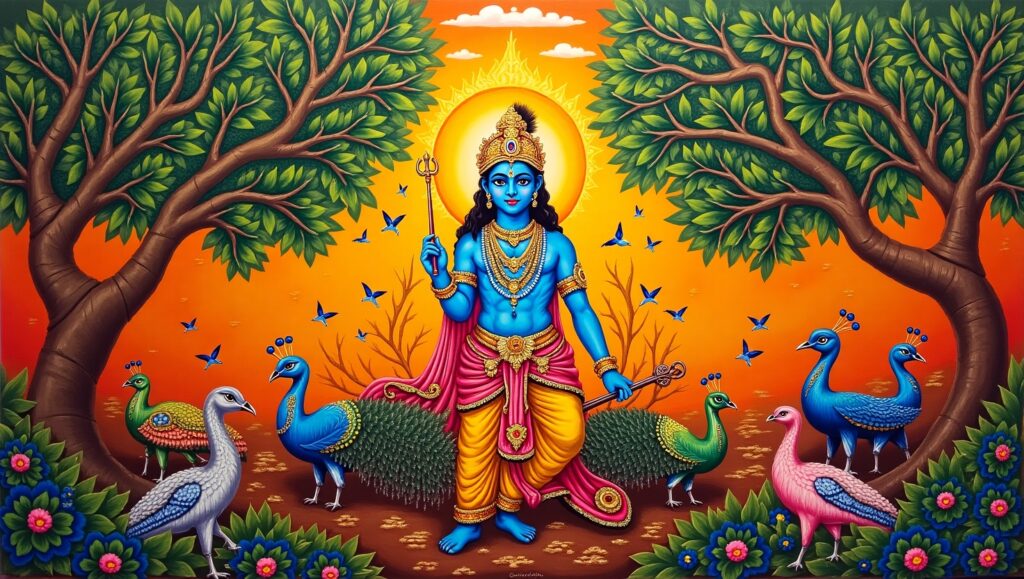
Pichwai is derived from two Sanskrit roots, “pichh” which translates to back and “wai” to hanging. Pichwai paintings are elaborate and intricate cloth backdrops that are painted and used to reverently display the idol of Lord Shreenathji, a form of Krishna venerated in temples, mostly in Nathdwara, Rajasthan where this art form originated.
Pichwai artworks carry a deeper essence and meaning than their physical form. They seek to create a blissful and divine atmosphere, depicting various phases of the life of Krishna and in a symbolic manner, portraying various festivals.
History: Nathdwara and Global Influence
Pichwai Art originated more than 400 years ago in the temple town of Nathdwara, located near Udaipur in Rajasthan. The town became a notable center of Pushtimarg, a sect of Vaishnavism founded by Vallabhacharya, wherein Krishna is worshiped as a child, Shreenathji.
As temple worship intensified, the intricate backdrops would be frequently changed, often in tune with the seasons and festivals. There arose the need for detailed cloth paintings showing the life and leelas of Lord Krishna. This includes His divine activities, moods, and the festivals held in His honor.
Pichwai paintings became popular in temples, and in due course, they were displayed in homes and galleries and integrated into global art collections.
Symbolism and Themes in Pichwai Paintings
Pichwai Art is equally important in the art and spiritual worlds. Each of its elements is created with careful, spiritual significance and accent sounds. The main underlining themes are:
Shreenathji
Shreenathji is the center of Pichwai paintings and is illustrated with his left hand raised as if he is lifting the Govardhan Hill and his right on his waist. His expression is depicted as smiling and tranquil, and as divine.
Festivals and Rituals
Numerous Pichwai paintings are done for specific occasions such as Janmastami, Annakut, Sharad Purnima, and Holi. Each has its specific motifs, colors, and embellishments.
Annakut Pichwai portrays lavishly presented food in large quantities as offerings.
Holi Pichwai’s are characterized by high-spirited depiction of colorful and playful activities.
Sharad Purnima paniyaran may contain motifs of lotus flowers and cows grazing in moonlit night settings.
Cows and Nature
Associated with Krishna are cows and the pastoral land of Vrindavan which Pichwai paintings show with cows, lotuses, peacocks, trees, ponds, and richly ornamental details.
Materials and Techniques
Pichwai are traditionally painted on hand spun cloth or silk. The colors are natural and made of minerals, coal, indigo, gold, and silver. The work is meticulous and the process is intricate and time consuming.
- Preparation of cloth: The fabric is starched and polished, which smoothens the cloth.
- Sketching: An outline is done with light pigment or charcoal.
- Color application: Several layers of natural color are added, skillfully and slowly.
- Detailing: Using fine brushes, intricate jewelry, floral and textile details, and expressions are painted.
Weeks or months of work can go into creating a single piece of Pichwai.
Modern Revival and Current Adaptations
Pichwai art has been confined primarily within the Nathdwara temple boundaries for practice. In the last few decades, however, this art form has undergone a significant revival due to the patronage of art lovers, NGOs, and contemporary designers.
Contemporary reinterpretations of Pichwai art include:
- Minimalist representations for contemporary home and office decor
- Digital printing on silk and canvas
- Integration into fashion and textiles
- Showcased exhibitions inside and outside of India
While some traditionalists are concerned over the erosion of authenticity, others welcome this change as a means of sustaining and advocating for a traditional art in contemporary society.
Importance of Pichwai Art in the Contemporary Context
In the modern world, marked by rapidly evolving digital designs, Pichwai stands its ground. It offers painstaking craftsmanship and profound spiritual layers. It intertwines India’s devotional history and serves us a reminder of the sacred dimensions of art which goes beyond mere decoration.
Pichwai paintings are far more insightful than mere aesthetics; they offer the integration of mythology and meditative tales, and invite one to engage with the layers of tradition.
Factors to Consider When Looking to Acquire Pichwai Art
While collecting or purchasing Pichwai artworks, remember the following:
- Hand-painted vs Printed: Authentic Pichwai involves hand-drawn elements, showcasing brushwork and intricate details.
- Material: Authentic Pichwai are done on cloth or silk. Synthetic polyester canvas disqualifies authenticity.
- Artist’s Signature or Stamp: Some of the artworks are signed by the artists or workshops of Nathdwara.
- Price: Original Pichwai pieces are expensive due to the time and effort needed to create them.
Final Thoughts
Pichwai Art is not just an art form, but a spiritual journey illustrated on a canvas. The artworks portraying intricate details and devotion continues to retain timeless beauty and thus, inspires reverence, regardless of whether it is placed in a temple or a modern house.
Supporting and learning about Pichwai, and traditional art forms not only helps in keeping alive the stories and skill of master artisans which are framed in the soul of India.