
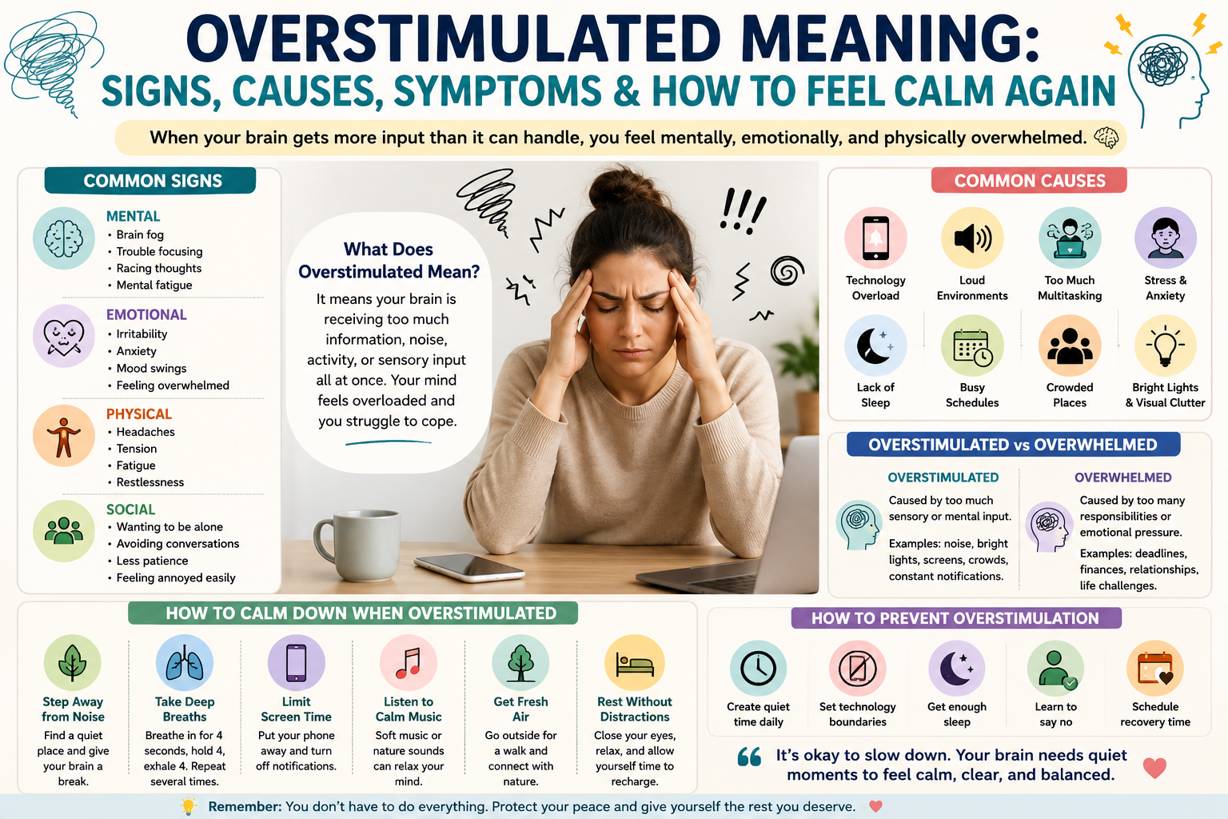
Overstimulated Meaning
Introduction
Have you ever felt like everything around you was simply too much?
Maybe the room felt too loud. Your phone wouldn’t stop buzzing. People kept talking to you while you were trying to focus. At the same time, you had tasks to finish, messages to answer, and responsibilities to handle.
Suddenly, you felt irritated, tired, stressed, and unable to think clearly.
If this sounds familiar, you may have been experiencing overstimulation.
Many people search online for “overstimulated meaning” because they experience these feelings but aren’t sure what to call them. In today’s world, overstimulation is becoming increasingly common due to constant notifications, busy schedules, social media, noise, and information overload.
The good news is that understanding overstimulation can help you manage it more effectively.
In this guide, you’ll learn:
- What overstimulated means
- Common signs of overstimulation
- Causes of overstimulation
- Overstimulated symptoms
- Overstimulated vs overwhelmed
- How to calm down when overstimulated
- Ways to prevent overstimulation
Let’s begin.
What Does Overstimulated Mean?
The word overstimulated refers to a state where your brain receives more information, activity, or sensory input than it can comfortably handle.
In simple terms, your mind feels overloaded.
When you’re overstimulated, your brain is trying to process too many things at once.
These may include:
- Loud sounds
- Bright lights
- Busy environments
- Strong emotions
- Too much social interaction
- Constant notifications
- Multiple tasks at once
Because the brain has limits, too much input can leave you feeling mentally and emotionally exhausted.
Being overstimulated doesn’t mean something is wrong with you. It simply means your mind needs a break from excessive stimulation.
Also read: 25 Mindfulness Exercises to Reduce Stress
What Does It Feel Like to Be Overstimulated?
Many people struggle to describe the feeling.
Overstimulation can feel different from person to person.
Some people feel anxious.
Others feel irritated.
Some simply feel mentally drained.
Common descriptions include:
- “Everything feels too loud.”
- “I can’t focus on anything.”
- “I just want everyone to stop talking.”
- “I need to be alone.”
- “My brain feels tired.”
- “I feel overwhelmed by everything.”
You may feel like your mind is running out of energy even though the day isn’t over.
Common Signs of Overstimulation
Understanding the signs can help you recognize overstimulation early
Mental Signs
Mental symptoms often appear first.
These include:
- Difficulty concentrating
- Racing thoughts
- Forgetfulness
- Mental fatigue
- Trouble making decisions
- Feeling mentally overloaded
Many people describe this as “brain fog.”
Emotional Signs
Overstimulation can also affect emotions.
Common emotional signs include:
- Irritability
- Frustration
- Anxiety
- Mood swings
- Feeling overwhelmed
- Increased stress
Small problems may suddenly feel much bigger than they normally would.
Physical Signs
The body often reacts to overstimulation as well.
Physical symptoms may include:
- Headaches
- Tension
- Fatigue
- Restlessness
- Increased heart rate
- Muscle tightness
Some people simply feel exhausted without understanding why.
Social Signs
Overstimulation can make social interaction difficult.
You may:
- Want to be alone
- Avoid conversations
- Feel annoyed by people
- Need quiet time
- Become less patient
This doesn’t mean you dislike people.
It usually means your brain needs time to recover.
Also read:- 175 Funny Questions to Ask
What Causes Overstimulation?
There isn’t one single cause.
Usually, several factors combine to create overstimulation.
Technology Overload
Technology is one of the biggest causes today.
Think about how much information you receive daily:
- Emails
- Text messages
- Phone calls
- Social media updates
- News notifications
- Videos
- Online meetings
Your brain constantly processes information.
Eventually, it can become overloaded.
Loud Environments
Noise can be exhausting.
Common examples include:
- Crowded stores
- Busy offices
- Airports
- Concerts
- Family gatherings
- Traffic
Continuous noise forces the brain to work harder.
Too Much Multitasking
Many people try to do several things at once.
For example:
- Answering emails
- Talking on the phone
- Watching television
- Checking social media
at the same time.
This constant switching of attention can drain mental energy quickly.
Stress
Stress and overstimulation often go together.
When you’re already stressed, your brain becomes less able to handle additional input.
Even small annoyances can feel overwhelming.
Lack of Sleep
Sleep helps the brain recover.
Without enough sleep, you become more sensitive to stimulation.
Noise, conversations, and distractions may feel stronger than usual.
Busy Schedules
A packed schedule can leave little time for mental recovery.
When every hour is filled with activity, the brain rarely gets a chance to rest.
Overstimulated vs Overwhelmed: What’s the Difference?
Many people confuse these terms.
Although they are similar, they are not exactly the sameOverstimulated
Overstimulation usually comes from too much sensory or mental input.
Examples:
- Loud sounds
- Bright lights
- Too many conversations
- Excessive screen time
Your brain becomes overloaded with information.
Overwhelmed
Feeling overwhelmed is often connected to responsibilities, emotions, or pressure.
Examples:
- Too many deadlines
- Financial stress
- Relationship problems
- Family responsibilities
You may feel overwhelmed even in a quiet room.
In contrast, overstimulation often involves external input.
However, both experiences can happen at the same time.
Also read:- ENFP Personality
Why Modern Life Creates More Overstimulation
Modern life constantly competes for our attention.
Every day we are exposed to:
- Smartphones
- Social media
- Streaming platforms
- Advertisements
- Emails
- News updates
Unlike previous generations, many people rarely experience true quiet.
The brain never fully switches off.
As a result, overstimulation has become increasingly common.
How to Calm Down When You Feel Overstimulated
The good news is that there are simple ways to calm your nervous system.
Step Away From Noise
If possible, move to a quieter environment.
Even five minutes of silence can help.
Try:
- A quiet room
- A park
- A walk outside
- Sitting alone
Reducing sensory input gives your brain space to recover.
Take Deep Breaths
Deep breathing helps calm the body’s stress response.
Try this:
- Inhale slowly for four seconds.
- Hold for four seconds.
- Exhale for four seconds.
- Repeat several times.
This simple exercise can reduce feelings of overload.
Limit Screen Time
Screens provide constant stimulation.
When overstimulated, consider:
- Putting your phone away
- Turning off notifications
- Taking a social media break
- Reducing screen exposure
Even a short digital break can make a difference.
Listen to Calm Music
Soft music can help create a more peaceful environment.
Many people find that:
- Instrumental music
- Nature sounds
- Rain sounds
- Gentle piano music
help them relax.
Get Fresh Air
Spending time outdoors can help reduce overstimulation.
Natural environments often provide a calming effect on the mind.
Even a short walk can improve how you feel.
Rest Without Distractions
Sometimes the brain simply needs a break.
Try:
- Sitting quietly
- Closing your eyes
- Lying down for a few minutes
Allow yourself time to recharge.
Mindfulness Techniques for Overstimulation
Mindfulness helps bring attention back to the present moment.
This can reduce mental overload.
Mindful Breathing
Focus only on your breath.
Notice:
- Each inhale
- Each exhale
- The movement of your chest
Whenever your mind wanders, gently return to your breath.
The 5-4-3-2-1 Grounding Exercise
Notice:
- 5 things you can see
- 4 things you can touch
- 3 things you can hear
- 2 things you can smell
- 1 thing you can taste
This helps redirect attention away from overwhelming thoughts.
Body Scan
Slowly focus on each part of your body.
Notice any tension without judging it.
This can help calm both mind and body.
Also read:- JJMR Site
How to Prevent Overstimulation
Prevention is often easier than recovery.
Here are some helpful habits.
Create Quiet Time Every Day
Even 10–15 minutes of quiet time can help.
Use this time to:
- Read
- Meditate
- Walk
- Relax
without distractions.
Set Technology Boundaries
Try:
- Turning off unnecessary notifications
- Limiting social media
- Avoiding screens before bed
These small changes can reduce daily stimulation.
Get Enough Sleep
Sleep is one of the best ways to protect your mental health.
Most adults need around 7–9 hours of quality sleep each night.
Learn to Say No
Many people become overstimulated because they take on too much.
It’s okay to decline activities when you need rest.
Schedule Recovery Time
Don’t fill every hour of your day.
Build breaks into your schedule.
Your brain needs time to recharge.
Can Children Become Overstimulated?
Yes.
Children can become overstimulated just like adults.
Common causes include:
- Loud environments
- Busy schedules
- Too much screen time
- Crowded places
Signs may include:
- Crying
- Irritability
- Difficulty focusing
- Tantrums
- Wanting to be alone
Children often benefit from quiet spaces and calming routines.
Also read:- Photos Editing Tips from AaryaEditz Org
When Should You Seek Professional Help?
Occasional overstimulation is normal.
However, consider speaking with a healthcare professional if:
- Symptoms happen frequently
- Daily life becomes difficult
- Anxiety feels overwhelming
- Sleep problems continue
- Stress becomes unmanageable
Professional support can provide personalized guidance.
Final Thoughts
Understanding the overstimulated meaning can help you better recognize what your mind and body are experiencing.
In today’s fast-moving world, overstimulation is becoming more common than ever.
Constant notifications, busy schedules, loud environments, and endless information can easily overwhelm the brain.
Fortunately, small changes can make a big difference.
Taking breaks, reducing screen time, getting enough sleep, practicing mindfulness, and spending time in quiet environments can all help you feel calmer and more balanced.
The next time you feel mentally overloaded, remember that your brain may simply be asking for a little rest.
Listening to those signals is one of the best things you can do for your well-being.
Frequently Asked Questions (FAQs) About Being Overstimulated
What does overstimulated mean?
Being overstimulated means your brain is receiving more information, activity, or sensory input than it can comfortably process. This can happen when you’re exposed to too much noise, bright lights, social interaction, screen time, or mental stress.
What does it feel like to be overstimulated?
Many people describe feeling overstimulated as mentally exhausted, irritated, anxious, or overwhelmed. You may find it difficult to focus, think clearly, or handle additional tasks and conversations.
What are the common signs of overstimulation?
Common signs of overstimulation include:
- Difficulty concentrating
- Mental fatigue
- Irritability
- Anxiety
- Headaches
- Restlessness
- Feeling emotionally drained
- Wanting to be alone
- Increased sensitivity to noise or light
What causes overstimulation?
Overstimulation can be caused by:
- Excessive screen time
- Social media overload
- Loud environments
- Bright lights
- Crowded places
- Multitasking
- Lack of sleep
- High stress levels
- Busy schedules
Often, several factors work together to create overstimulation.
Is being overstimulated the same as being overwhelmed?
Not exactly.
Overstimulation usually happens when there is too much sensory or mental input, such as noise, screens, or activity.
Feeling overwhelmed is often related to emotional pressure, responsibilities, deadlines, or life challenges.
However, many people experience both at the same time.
Also read:- RevolverTech Crew
Can overstimulation cause anxiety?
Yes. Overstimulation can increase feelings of anxiety because the brain struggles to process large amounts of information at once. When your mind feels overloaded, it may become harder to stay calm and focused.
How do I calm down when I feel overstimulated?
Some helpful ways to calm down include:
- Moving to a quiet place
- Taking deep breaths
- Reducing screen time
- Listening to calming music
- Going for a walk
- Practicing mindfulness
- Resting without distractions
Even a short break can help your brain recover.
Can too much screen time make you feel overstimulated?
Yes. Smartphones, computers, social media, videos, notifications, and constant online activity can overload the brain. Many people experience mental fatigue and overstimulation after extended periods of screen use.
Why do I feel overstimulated around people?
Social situations can create a lot of mental and emotional input. Conversations, background noise, social expectations, and busy environments can become overwhelming, especially when you’re already tired or stressed.
Can children become overstimulated?
Yes. Children can become overstimulated from loud sounds, crowded places, busy schedules, too much screen time, or highly active environments. Signs may include crying, irritability, tantrums, or difficulty focusing.
How long does overstimulation last?
The duration varies from person to person. Some people feel better after a few minutes of quiet time, while others may need several hours or a full day of rest to recover.
Can lack of sleep make overstimulation worse?
Absolutely. Poor sleep reduces the brain’s ability to handle stress and sensory input. When you’re tired, everyday situations may feel more overwhelming than usual.
Does mindfulness help with overstimulation?
Yes. Mindfulness techniques such as deep breathing, meditation, grounding exercises, and body scans can help calm the nervous system and reduce feelings of overload.
How can I prevent overstimulation?
You can reduce overstimulation by:
- Taking regular breaks
- Limiting screen time
- Getting enough sleep
- Managing stress
- Spending time in quiet environments
- Practicing mindfulness
- Creating healthy boundaries around work and social activities
Small lifestyle changes can make a significant difference.
When should I seek professional help for overstimulation?
Consider speaking with a healthcare professional if overstimulation happens frequently, affects your daily life, causes severe anxiety, interferes with sleep, or makes it difficult to manage normal activities.
Author bio:
Hello, I am a professional SEO Expert & Write for us Technology and submit a guest posts on different platforms- we provide a good opportunity for content writers to submit guest posts on our website. We frequently highlight and tend to showcase guests.