
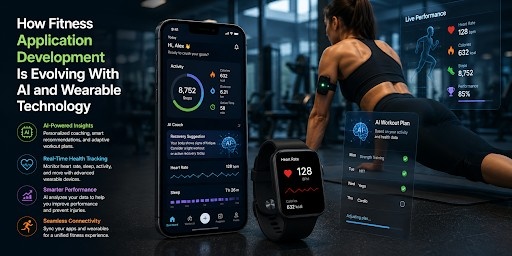
Data had been talking to Amara Diallo for four months, but it was taking her a little too long to listen.After four months of training for her first triathlon, the data was starting to speak. She had been decreasing her heart rate variability (HRV) for eleven days, as measured automatically in her sleep with a chest strap. Subjective feel was OK. She was on her swim splits, her bike power was still good, and she was feeling energetic in the morning. The HRV trend appeared when she was training with the application, though, and it also pointed to a decrease in running volume to 30% less over the next 10 days, with the intensity sessions being replaced by zone 2 aerobic work, which she initially didn’t want to do. She did as she was told, but not with a lot of enthusiasm. Two weeks later, her HRV trend shifted and her running pace at the same effort level had measurably improved and she was able to finish the tri without the injury that was the reason for her previous end of the distance attempt two years ago. The sensor had sensed what she couldn’t sense and the application had known what to do with what the sensor had found. That chain is the biological signal to interpreted recommendation to behavioral outcome, and it’s what a serious Fitness Application Development Company is now developing as a core product feature, rather than a premium one. The transformation from digital training logs to real-world intelligent coaching systems has been swift and the difference between applications that have made the transition and those that are still maintaining manual training logs with a modernized user interface is a commercial reality.
How AI Has Restructured the Core Product Logic
In the start of the previous decade fitness apps were advanced log books! They recorded what users entered and returned it to them in charts, and provided programs based on fixed periodization, which were not adjusted according to a user’s activity or body response. The intelligence was in the program design that was set, and the interface which made the program easier to follow. The application itself was fairly passive.
The product logic has been dramatically reshaped by AI. Current AI systems in modern fitness applications are “active agents” that continuously ingest data from various behavioral and physiological sources, recognize patterns in the data streams that hold predictive power, and suggest as recommendations what they see as patterns in the near real-time data. The program isn’t hard-coded. It is a continually updated guess on what this particular person should be doing next, considering all the data that the system has gathered on how they have reacted to training, sleeping, eating and recovering over the past weeks and months while on the platform.
This is a radical change in value proposition from a passive recorder to active inference. The value of a logbook goes hand-in-hand with the discipline of the individual who uses it. As with any AI system, the value of the coaching system can increase over time as more data is fed into the system and the system learns more about the individual. What is this that makes users feel better guided from day one when they are on the platform, but qualitatively better when they are on the platform for 12 months?What is this that makes users feel more guided on the platform on day one, but more on day 120s?
Wearable Integration as the Data Foundation
The more that the data flowing into the AI layer is improved, the better it will perform, and over the last five years, the number of wearable sensors has increased by leaps and bounds and what fitness apps can now learn about their users will be astounding. Now, devices that a large population of active adults wear to their bodies all the time capture the heart rate, the heart rate variability, the blood oxygen saturation, the respiratory rate, the skin temperature, the galvanic skin response, the architecture of sleep stages, the number of steps, the GPS position, the altitude and the acceleration of the movement.
All of these carry information about physiology, which wasn’t accessible to individual athletes or casual fitness enthusiasts in laboratory settings 10 years ago. Data from blood oxygen saturation is a useful indicator of altitude acclimatization for everyone training at altitude. Pre-symptomatic correlation of RRV can lead to a training modification. Skin temperature fluctuations, or the difference between them, before changes in the menstrual cycle phase enable female athletes to fine-tune training intensity to match hormonal fluctuations in strength and recovery.
The communication link between these sensors and fitness applications has developed alongside the sensors. The standardized Bluetooth profiles for health and fitness allow a Garmin running watch, Whoop recovery band and Polar heart rate monitor to all send data to a central application, without the need to develop custom hardware integration for each device. At the OS level, Apple’s HealthKit and Google’s Health Connect centralize all that data, allowing fitness apps to tap into a single central sensor data stream instead of establishing separate relationships with all hardware manufacturers.
This ecosystem maturity has given rise to a new competitive landscape for wearable manufacturers and application developers. The more accurate and detailed the physiological information that the wearable is able to collect, the more users will be won. The app that does the most with the data available gains users from all sets of hardware preferences. User outcomes are greatest at the nexus of the highest-level application intelligence and sophisticated hardware.
AI Coaching: From Generic Programs to Individual Models
The distinction between a fitness application that uses AI as a feature and one that is genuinely AI-powered at its core shows up most clearly in how coaching recommendations are generated. A feature-level AI implementation applies population-level models with individual inputs: it takes general research about optimal training loads, applies the user’s stated goals and fitness level, and produces a program that is personalized in the sense of being filtered through individual parameters but not in the sense of being learned from individual response data.
A genuinely AI-powered coaching system builds an individual model from observed data. It learns not just what intensity a user should be training at according to population norms, but what intensity this specific user has historically responded well to, how long their recovery from high-intensity sessions takes relative to predicted timelines, which training formats produce the best adherence for their usage patterns, and what combination of signals most reliably precedes a performance breakthrough or a breakdown in that individual.
Building individual models at this level of sophistication requires longitudinal data, which is why the most capable systems are structured to improve continuously over time rather than producing a static assessment at onboarding. Amara’s HRV trend was meaningful in the context of eleven consecutive days of data. Without that longitudinal baseline, the same HRV reading on a single morning is noise rather than signal.
Nutrition and Recovery as Integrated Layers
The fitness applications capturing the most comprehensive user outcomes are increasingly those that treat training, nutrition, and recovery as a unified system rather than separate domains that happen to exist within the same product. Training adaptation doesn’t happen in the gym. It happens during recovery, and recovery quality is determined in significant part by sleep and nutrition in the hours that follow a session.
Applications that integrate dietary tracking with training load data can surface connections that neither layer reveals in isolation. A user whose strength performance has plateaued for three weeks, whose protein intake averages significantly below target on training days, and whose sleep quality is lower on nights following intense sessions is experiencing a recovery deficit that shows up clearly in the combined data even if none of the individual signals are alarming in isolation.
Continuous glucose monitoring integration has added a particularly valuable signal for this combined layer. Real-time glucose data during and after training sessions reveals how different fuel strategies affect performance and recovery for specific individuals in ways that population-level sports nutrition research cannot predict for any given person. The user who discovers that their pre-workout carbohydrate timing has been suppressing their fat oxidation capacity during the aerobic sessions that constitute the majority of their training volume has received genuinely actionable individual information that changes their approach.
The Real Investment Behind Serious Fitness Apps
Organizations evaluating fitness application development with genuine AI and wearable integration discover early that fitness application development cost is structured differently from building a standard mobile application with fitness-related content. The expense categories that define the budget for AI-powered, wearable-integrated fitness platforms include the data pipeline infrastructure that ingests, normalizes, and stores continuous sensor data streams at scale, the machine learning engineering required to build individual user models that improve with use rather than applying static population models, the wearable SDK and API integration work across multiple hardware manufacturers and platforms, and the ongoing model maintenance required as sensor hardware evolves and user populations expand.
Teams that scope AI-powered fitness applications by estimating feature development costs without accounting for the data and modeling infrastructure systematically underestimate total project cost. The application features are the visible surface. The infrastructure that makes the AI layer function reliably at scale is the structural foundation, and it is considerably more expensive to build correctly than to build inadequately. Applications whose AI infrastructure is underpowered relative to their feature promises deliver experiences that feel smart at small scale and degrade as user numbers and data volumes grow.
Where the Category Is Heading
Amara’s triathlon preparation story ends with a successful race and an intact body. The more forward-looking question is what her training preparation will look like in three years as the technology that made her HRV insight possible continues to develop. Non-invasive glucose monitoring that moves continuous metabolic data from the CGM patch to the smartwatch. Blood biomarker estimation through photoplethysmography that makes inflammation markers accessible between clinical blood draws. Sleep staging accuracy that reaches parity with polysomnography through consumer devices. Muscle oxygen saturation sensors that provide real-time insight into energy system utilization during training.
Each of these capabilities, some available now in early form and others approaching commercial viability, will generate data streams that fitness applications will need to interpret and integrate into coaching recommendations. The application development teams building the physiological data interpretation infrastructure today are positioning themselves to absorb those new signal sources as they become available, while teams that haven’t built that foundation will face the same architectural rebuild that passive logbook applications faced when AI coaching became the market expectation.
The evolution isn’t complete. It is ongoing, and the distance between where the best platforms are today and where the category will be in five years is probably larger than the distance it has already traveled. For users like Amara, the practical meaning of that trajectory is clearer training guidance, fewer preventable injuries, and performance outcomes that used to require a dedicated sports science team to approach. The technology is democratizing a quality of athletic support that was previously available only to elite programs, and the fitness applications making that democratization real are the ones that took the AI and wearable integration seriously from the beginning.